For federal employees, the date you retire isn’t just a calendar detail, it can significantly affect how much money you take home. Your retirement date influences your pension start, how much leave you cash out, and even your final paycheck.
Here’s a streamlined guide to help you pick a retirement date that protects your benefits and maximizes your income.
There’s No One “Perfect” Retirement Date
While certain dates offer more financial advantages than others, the ideal date ultimately depends on your goals, eligibility, and personal timing. Some people prioritize the fastest pension start, others want the biggest leave payout, and some just want to retire when they’re ready.
The key is knowing how each timing factor affects your benefits — then choosing the date that fits your situation.
1. Retire at the End of a Pay Period to Maximize Leave Accrual
Federal employees earn annual and sick leave at the end of each pay period.
If you retire even one day before the pay period closes, you miss out on that final chunk of leave.
Why it matters:
- Those last hours of annual leave add money to your lump-sum payout
- Missing a pay period accrual could cost you hundreds of dollars
- Sick leave still counts toward your service time, so it’s worth capturing
Best practice:
Choose a retirement date that falls on the last day of a pay period so you don’t lose any earned leave value.
2. Retire at the End of the Month to Start Your Pension Sooner
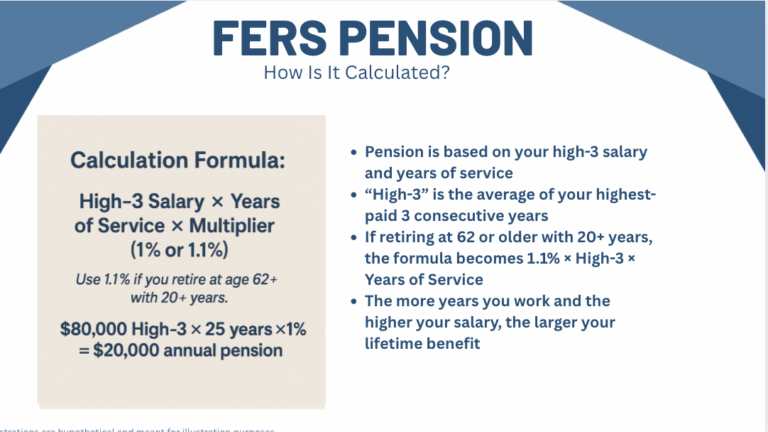
Under FERS, your pension begins on the first day of the month after you retire.
Here’s the catch:
- Retire on March 31 → Pension starts April 1
- Retire on March 15 → Pension still starts April 1, and you lose half a month of income
That gap can add up.
Best practice:
Whenever possible, retire on the last day of a month so your annuity starts right away on the next month.
3. Retire Near the End of the Leave Year to Maximize Your Leave Payout
Most federal employees can normally carry over up to 240 hours of annual leave. But at retirement, something special happens:
If you retire at the end of the leave year, the carryover limit no longer applies.
You will be paid for all of your unused annual leave — even if you have far more than 240 hours.
Why this matters:
- A large leave balance can turn into a big lump-sum check
- You’re paid at your current hourly rate (including raises and locality adjustments)
- Some employees intentionally build up leave in their final year for this reason
Best practice:
If your goal is the highest possible cash-out, target a date near the leave year cutoff.
Putting It All Together: What Dates Are Usually Strong?
The best dates in any year tend to be those that combine as many advantages as possible:
✔ End of a pay period
✔ End of a month
✔ Near the end of the leave year
Examples for the 2026 Year:
January 10, 2026
May 31, 2026
October 31, 2026
December 31, 2026
January 9, 2027
Schedule Your Complimentary Retirement Session Today
We’ll help you break it all down, step by step — including your pension estimate, TSP strategy, life insurance, and more.